Wednesday, 25 May 2016

3D Food Printing


It is 2016, many companies are attempting to 3D print a variety of new things and 3D printing technology has been recognized even in the food industry.

The 3D printing technology is an tremendous technology and becoming crucial to the way in which people socialize with food later on.

Most supermarkets happen to be experimenting to 3D print customized cakes, eateries are offering printed desserts. Some even claim that there are going to be a 3D food printer in every house in only two years. One thing is certain: this fast growing marketplace has tremendous potential.

However, many kinds of research are needed to change the hype into reality. Which sectors will be impacted by the technology? Which food parts can be printed later on? And which aspects should be considered to ensure protection and maintainability of 3D printed food?

Consider the replicators on Star Trek film and the many other machines that feature on science fiction movies. This could really be our future. 3D food printing has the potential to revolutionize food production by improving culinary imagination, food sustainability, and nutritional customizability, but technical and market challenges still face it in recent years in the future.

3D PRINTING FOOD ISN'T THAT SIMPLE

Most 3D printers function by slowly depositing layers of stuff, one on top of the other until an item is built completely. The process is called “additive making,” and it uses deposit printers. Others bind layers jointly with adhesive — they’re called binding printers.

3D food printers are more challenging to describe. Hod Lipson, the supervisor of Cornell University’s Creative Machines Lab, laid out the three dominant approaches to printing food at the 2015 Inside 3D Printing convention in Nyc, which are nozzles, powdery substance, and lasers. “You can think of it as the ‘RGB of food,’,” he told Digital Trends.

Many systems join and match those strategies. The 3D Systems ChefJet crystalizes thin layers of fine-grain sugar into just about any geometric shape while Natural Foods’ Choc Edge dispenses chocolate from syringes in wonderful, melty patterns. The Foodini uses fresh ingredients loaded into stainless steel capsules to prepare a surprisingly comprehensive array of dishes. Its latest version just isn't a soup to nuts alternative — it merely prints uncooked doughs, which later must be cooked as normal — but the printer can somewhat make pizza, filled pasta, quiche, as well as brownies.

None of these machines will be next in line for the Bocuse d’Or chef tournament, nevertheless. Emilio Sepulveda, the cofounder of Foodini manufacturer Natural Machines, has said openly that food synthesizers like those seen in Star Trek and The Fifth Element will take “many more years” of development.

But that’s not keeping early adopters. Some German nursing homes serve a 3D-printed food product called Smooth foods to aged residents that have trouble chewing. Purees, the conventional choice, usually aren't extremely appetizing, which sometimes leads to below eating. Residents “get malnourished in special situations,” said Kjeld van Bommel, a research scientist at the Netherlands Organization for Applied Scientific Research, in an interview with the Washington Post.

The more delicious Smooth foods — made of mashed carrots, peas, and broccoli, which 3D printers congealed with an edible paste — are already a success; 1,000 of the state’s facilities now serve them daily.

3D FOOD PRINTERS INFRINGE THE GOURMET WORLD

On the opposite end of the gastronomic spectrum, 3D food printers are beginning to break gourmet spaces. Before this season at the Consumer Electronics Show (CES) in Vegas, the Culinary Institute of America (CIA) unveiled a partnership with 3D Systems, a manufacturer of the ChefJet. The CIA intends to begin beta testing with the ChefJef, and 3D Systems will furnish CIA students with fellowship and internship programs at the business’s headquarters in La.

We currently have an extremely heavy, visceral response to foods we don't understand.

Tom Vacarro, the dean of Baking and Pastry Arts at CIA, talked to WAMC Northeast Public Radio about the arrangement. “We just required that ran with it and said, okay, we could do many different things with these printers and here’s our thoughts,” he said. “[You can] design your form on the display, and reach print, and out it comes. It just shaves off all of that back and forth time.”
3D Systems Creative Director Liz von Hasseln, talking at CES, said she sees food printing “as something that … will become part of the culinary cloth.”

But 3D food printing has many challenges to overcome. Apparatus like the recently announced Carbon3D can fabricate a mind-boggling quantity of things in minutes, but that amount of advancement hasn't dripped down to food printers yet. The most common layouts need consecutive layers of repairing to cool, resulting in exceptionally long wait times for some foods.


For more news and articles at http://tntreview.com.

Monday, 16 May 2016

Smart House Technology: What to anticipate?


Attendees of the Consumer Electronics Show in Las Vegas this year were faced with different kinds of smart-house devices. From $5,000 refrigerators that can carry when you’re running out of milk and eggs, to control lights, locks and thermostats from your cellular application or TV screen, these products and technologies all shown. Consumers are left to compete when their smart-house investments will translate into cost savings, energy efficiency, and increased convenience.

Businesses and entrepreneurs have assembled extraordinary bits of the smart-house puzzle, but these bits have not been linked yet in ways that's, to date, empowered a more intelligent consumer.

Parks Associates house energy direction data released in March 2016 show 70% of homes with smart-energy apparatus report saving money because of reduced energy consumption. On the other hand, the research company noted challenges for sellers selling smart-energy appliance according to cost markets, as 83% of U.S. broadband families do not comprehend the price they are paying for electricity.

To close the gap between availability and adoption, all stakeholders in the smart-house ecosystem — appliance manufacturers, technology suppliers, services, integrators and interoperability standards bodies — must enlarge the focus from creating a smart house to empowering a more educated consumer through actionable data. That is possible through several strategies.

Need for Internet of Things-centric strategy

An IoT-centric strategy is crucial, as signs demonstrates consumers are building their smart house one device at a time. Forrester survey in 2015 finds that about 13% of consumers use one or more smart-house device, which implies that, over time, there's a should help consumers recognize how multiple devices can control or operate in conjunction with one another.

Will my security system have the opportunity to control my light system? Will my smart thermostat speak to my smart meter, and vice versa? These are not questions that smart-house sellers happen to be compelled to answer with early adopters — who consistently prioritize product initiation over practicality — but you can find answers that mainstream consumers will need before investing numerous dollars in thermostats, lights, locks, security systems, and appliances.

If smart-house products, systems, and devices can't speak to one another, consumers are left with good-to-have but not desire-to-have technologies which will offer step-by-step edges and a few cost economies, but not enough to defeat consumer confusion, optimize economies and address cost concerns.

As more products arrive at the market, the IoT-centric strategy will end up more crucial: A recent Parks Associates white paper suggests that 40% of U.S. broadband families intend to purchase smart-house apparatus in the next 12 months, but includes that IoT interoperability is vital to driving consumer adoption of smart-house options going forward.


Preserving attempts are underway to improve interoperability and align various wireless models, as an example, ZigBee and Z-Wave, so as you are able to simplify how IoT equipment and detectors socialize with one another. The more that business can switch from proprietary products and competing standards that require considerable integration attempts to an IoT-centric strategy whereby consumers get useful, actionable intelligence based on real time, shared apparatus and detector information, the more likely this is always to spur connected devices adoption, from your early smart house technology appliances adopter to more of the mass market.

Information must go beyond the smart house

We now have used the phrase “smart house”, but the significant thing is that there is a massive difference between connected-house technology and smart-home technology — and that’s tips: Actionable data that can create intelligent consumers.

It's motivating to see the market moving from individual smart-house products that might or mightn't incorporate readily with one another to smart-house “isles” that link a few of apparatus and services.

The Amazon Echo launched a device with minimal expectations but has got increasingly favorable reviews for empowering consumers to voice-activated smart-house apparatus and services inside and outside the house, such as the ecobee and Emerson joined thermostats to Philips Hue light bulbs to smart-house platform Samsung SmartThings, and expanding the IoT outside the smart house to integration with services like Uber and Dominos Pizza.

Much of the focus around now’s smart house targets new product features and functionality, in place of the IoT-driven information these devices can supply to consumers. This is why, to an extent, the smart house has realized a fraction of its complete potential.

While IoT enables data for the assembly, processing and evaluation of huge quantities of information from an extensive variety of detectors inside and outside your house, there remain challenges to present this data to consumers in a unified and intuitive fashion.

Competing standards and equipment compatibility difficulties impede a dramatic perspective of info, and often for data that is made accessible, the consumer must jump through hoops to find and get it. Empowering a more intelligent consumer depends on presenting actionable data in a exceptionally consumable manner to ensure that users can easily understand, by means of example, how mechanically correcting a thermostat two degrees affects energy costs, or how outside weather conditions impact the energy needed to warm or cool the house.

Knowledge is power. All stakeholders in the smart-house ecosystem must empower a more educated consumer for the bright-house marketplace to boom.

To read more news and articles, visit TNT Review at http://tntreview.com. You may even check Vustar shop for smart home devices at http://eshop.vustar.cn.

Thursday, 12 May 2016

Samsung Galaxy Note 6 Specifications and Release Date


Samsung has declared two principal smartphones this that will be released this year but chances are that is not going to be the last we hear from Samsung.

The Galaxy S7 and Galaxy S7 edge both debuted at Mobile World Congress in March, but rumors began floating about for the firm's bigger smartphones before the big occasion in Barcelona Spain was even supported. Now it's well and truly over and focus has turned towards what Samsung will start next.

The Samsung Galaxy S7 edge and the Galaxy Note 6 have both been speculated upon but the latter device is what this aspect is focusing on. This can be everything we understand about the Galaxy Note 6 so far, but as usual, we'll be adding to the specs as more leaks and rumors show.

Samsung Galaxy Note 6 release date

The Samsung Galaxy Note 5 started on 13 August 2015 alongside the Galaxy S6 edge , but the Note was not designed for European waters in a bid to drive the S6 border as the phablet to chew over instead.
Reports signal Samsung considers this to be a blunder though and it's since been signified the Galaxy Note 6 will bring the Note equipment back to the united kingdom in favor of the Galaxy S7 border.

 
Sources maintain the Galaxy Note 6 will start in Europe in August 2016, which matches with the firm's previous release cycle from last year. Preceding to 2015, the Note equipment used to launch at the start of September at IFA.

As for when the Galaxy Note 6 will reach store shelves, well known flows Evan Blass has assured it is going to release in the US on the week of 15 August.

Samsung Galaxy Note 6 layout

The Samsung Galaxy Note 5 came with an all-alloy construct, moving from the faux-leather and plastic material made available from its forerunners. It measures 153.2 x 76.1 x 7.6mm, reaches the scales at 171g and comes complete with the S Pen.

The gossips are few and far between as it concerns to the Note 6's layout at the minute but we wouldn't expect a dramatic change compared to the Note 5, even if there have been reports of curved and level variations.

The Samsung S7 and S7 edge both followed the identical design lines as the S6 and S6 edge with a few refinements so chances are this will also function as a condition for the Note 6 too given the Note 5 found fairly several changes in comparison with the Note 4. Both the S7 and S7 border added IP68 water and dust resistance, yet, which can be something which has been touted for the Galaxy Note 6.

It, in addition, has been guaranteed an iris scanner will be on board, but aspects were infrequent so it isn't clear if it'd be infrared like Fujitsu, a light like the Lumia 950, or something more advanced.

The one characteristic that may most probably appear is the S Pen but apart from that, it really is a guessing game right now. Metal build, some form of security scanner whether fingerprint or iris and the ageless rectangular Note contour would all be quite credible predictions, nevertheless.

http://tntreview.com/Samsung Galaxy Note 6 display

The Samsung Galaxy Note 5 arrived with a 5.7-inch screen offering a 2560 x 1440 resolution that provided a pixel density of 515ppi. The Note show has consistently been praised due to its display, with the AMOLED technology generating dynamic, punchy colours and deep blacks.

Gossips signal the Note 6 will continue the Super AMOLED technology but it seems that the display size could grow very slightly to 5.8-inches. The resolution can be said to be sticking to Quad HD which if all true, would mean a somewhat lower pixel density of 506ppi. This, nevertheless, isn't going to be noticeable to the human eye to help you still anticipate a great display meeting from your Note 6.

Sammobile, in addition, has reported a 5.8-inch Super AMOLED display with a Quad HD resolution, supporting other rumors but it also implies a curved screen, which a Weibo user additionally reported. This could mean the Note 6 takes clues in the S7 edge, but that would also make the view of a Galaxy S7 edge redundant.

It could also mean greater than one Note 6 equipment arrives, maybe a curved and a level choice like the S7 and S7 border, and there, in addition, has been the discussion of a Note 6 Lite. This latter apparatus can be said to be coming with a 5.8-inch display also but the resolution is reported to drop to Full HD.

Samsung Galaxy Note 6 camera.

The Samsung Galaxy Note 5 contains a 16-megapixel main camera and a 5-megapixel front-facing camera, both of which offer an aperture of f/1.9, which is broader than the Note 4.

In accordance with a Weibo report, the Note 6 will be coming with a 12-megapixel primary camera offering "Super OIS Plus", while another Weibo user indicated it would feature infrared-based autofocus. The front-facing camera detector was not detailed on either report. The Note 4 and 5 were both commended camera abilities so we'd anticipated the Note 6 to follow suit, although we'd expected laser autofocus to be more likely.

The Galaxy S7 and S7 border both have 12-megapixel rear cameras and a 5-megapixel front camera so perhaps the company uses the exact same sensor for the Note 6. This would make sense given the compliments both the S7 and S7 edge have received. The front and the rear snappers offer an aperture of f/1.7 to help them shine in low light conditions so we'd like to see the same skills in the Note 6 at the very least.

Having said that, there also have been claims to signify Samsung is working on a fresh 1/2.3-inch detector that will be accompanied by a lens with an aperture of f/1.4, which is said to offer 17% lighter, plus the additional light the bigger detector will bring. It isn't clear if this new camera will be prepared for the Note 6 but fingers crossed.

Samsung Galaxy Note 6 hardware

The Samsung Galaxy Note 5 has an octa-center Exynos chipset, 4GB or RAM and 32GB of 64GB of internal memory. The aluminum body means microSD support was removed as was a removable battery, the capacity of which dropped to 3000mAh from the 3200mAh of its forerunner.
The Galaxy Note 6 is said to be coming with either a Qualcomm Snapdragon or Exynos chipset determined by the region, along with 6GB of RAM, based on Weibo. Exactly the same site has signaled it will be the Qualcomm Snapdragon 823 processor, which could be effective at supporting up to 8GB of RAM. Samsung's S7 and S7 edge both come in two variations, among which offers the Qualcomm SD820 processor and the other of which uses the inhouse Exynos Octa 8 central processing unit so the notion of two kinds in accordance with the place is possible, although whether it the support will be 6GB or 8GB of RAM is uncertain.

Storage options happen to be touted as 64GB and 128GB in one Weibo report while another claimed 256GB of storage would be on board. Neither report confirmed whether microSD support will be reintroduced but if the 128GB and 256GB storage choices are exact, it truly is unlikely we are going to find microSD accompany them.

If the Note 6 comes in a curved and level form, it is likely that they'll both offer the exact same specs, like the S7 and S7 edge do. The Note 6 Lite, on the other hand, is reported to be coming with the Qualcomm Snapdragon 820 processor and 4GB of RAM.

Samsung Galaxy Note 6 battery

In accordance with SamMobile, the successor to the Galaxy Note 5 will feature a USB Type-C interface, something which the Galaxy S7 and S7 edge missed off their spec sheets. Samsung is expected to comprise the reversible connector for the Note 6 though, but it's unknown when it is going to support USB 3.1 or an older standard. If the Note 6 were to support USB 3.1, the connector would supply USB Electricity Delivery 2.0 for quicker gear charging as well as the skill to deliver HDMI and Display Interface video signals.

Battery capacity was rumored to be around 4000mAh, along with 4200mAh, but is not clear whether the Note 6 will return to offering a removable battery like preceding Note equipment before the Note 5. We guess not.

The Note 6 Lite also can be rumored to be coming with a 4000mAh battery capacity, which if true means it might just take a hit on the display resolution and central processing unit in comparison to the primary gear.

Samsung Galaxy Note 6 programs

The Samsung Note 6 will probably begin with Android Marshmallow 6.0 along with Samsung's TouchWiz interface over the top and the various characteristic extras that complement the S Pen.

We'd to imagine a look towards the Galaxy S7 and S7 edge offer a terrific indicator seeing what we can expect from your Note 6 although no doubt there will be some developments and refinements.

SamMobile has maintained Samsung is working on a BlackBerry Hub-type characteristic called Samsung Focus, however. The BlackBerry Hub was among the greatest characteristics of BlackBerry, pulling in notifications from various services including email, messages, and social networks into one location. Samsung Focus will apparently do something similar, pulling in an e mail, schedules, contacts and memos.

SamMobile says the aggregation of emails will be among its important features working in an identical way to Google's Inbox program. The website assured there would function as a main screen for important occasions and a listing of the day's plans, along with a committed contacts page.

Samsung Galaxy Note 6 conclusion

Whilst the rumors have started to circulate for the Samsung Galaxy Note 6, there exists now a lot of guess work occurring.

Based on what we've learned up to now, we had anticipated the Note 6 to arrive in August 2016 with precisely the same layout to the Note 5 including S Pen functionality. It wouldn't be too surprising to see a curved variant as great as a Lite version but it's not clear for now if this will be the scenario.

Hardware specs will likely improve over the Note 5 including a faster central processing unit, perhaps more RAM, and an improved camera meeting. We are going to upgrade this characteristic as more leaks look so hang tight for now.

Friday, 6 May 2016

Mother's Day History


The exact origin of Mother's Day dated way back the age of Romans and Greek. But the origins of Mother's Day history also can be monitored in UK where a Mothering Sunday was observed considerably before the holiday saw the light of the day in the US. The party of the festival as it's seen now is a recent phenomenon rather than even a hundred years old. As a consequence of the effort of the pioneering girls named Julia Ward Howe and Anna Jarvis. Now the holiday of Moms day is observed across 46 states (though on different dates) and is a massively popular occasion. A lot of people around the globe take the day as an opportunity to honor their mothers, thank them for their never ending efforts raising them and being there for their continuous support.
First History of Mothers Day

The first history of Mothers Day celebration dates back to the historical annual spring festival of the Greeks dedicated to maternal goddesses of Greek Mythology. The Greeks used the occasion to honor the mother of many gods and goddesses of Greek mythology, wife of God Cronus and Goddess Rhea.
Early Romans, additionally, celebrate Hilaria dedicated to Cybele, a mother goddess, among the springtime festivals that are Romans. The festival in honor of Cybele started some 250 years before Christ was born. The party started on the Ides of March which Romans making offerings the celebration continued for sequential three days and the said celebration includes games, parades, and parties. The parties were notorious that followers of Cybele were dismissed from Rome.

Mother's Day was observing during the holiday on the fourth Sunday of Lent in honor of the Mother of Christ, Virgin Mary by Early Christians. Meanwhile in England, the vacation was enlarged to include all mothers. It was later called "Mothering Sunday".

http://tntreview.com

During the 1600s in England was noticed as the newest history of Mothers Day celebration. Mothering Sunday has observed annual on every 4th Sunday of Lent Season (40 day period earlier Easter) to honor mothers. After a prayer service in church to respect Virgin Mary, kids brought flowers and presents to pay tribute with their own moms.

On the function, apprentices, servants and other workers staying far from their houses were inspired by their businesses to see their mothers and honor them. Traditionally kids brought their presents and a cake with fruits also known as simnel a fruit-filled pastry. Individuals and Yugoslavs in other states have observed similar days.

The custom of observing Mothering Sunday died out almost entirely by the 19th century. On the other hand, the day appeared to be observed after the World War II, when American servicemen brought the custom and business/commercial businesses used it as an event for sales back.

Present Day 


Now Mothers Day is observed in several countries including Belgium, Australia, UK, India, Denmark, Italy, Finland, Turkey, Mexico, Canada, China, US and Japan. Folks take the day as a chance thank them for all their love and support and to pay regard with their own mothers. The day is now incredibly popular and in several states. There's also a custom of gifting cards, flowers, and others present to mothers on the Mothers Day. The holiday is getting commercialized to a fantastic degree. Card makers, florists, and current sellers find tremendous business potential in the day and make a great amount of money through an extensive advertising marketing campaign.
It is unfortunate to remark Ms. Anna Jarvis, who dedicated her entire life for the declaration of Mothers Day celebration was significantly hurt to see the great commercialisation of the day.

For more news and updates, visit TNT Review website at http://tntreview.com.
Saturday, 30 April 2016

Future Transport with Self-Driving Car


Driverless car transport got an enormous play on technology, this week’s statement by Ford, Google, Uber, Lyft and Volvo that they formed an enormous group to press the U.S. government to speed up its basis for a coming age of driverless and cleaner cars will be viewed as a historic moment.

The Self-Driving Coalition for Safer Roads has a rough job ahead of it — but it mightn't be as daunting as it now appears once the edges of driverless cars sink in. Driverless transport might drastically reduce congestion and enhance journey speeds, helping the marketplace and improving the standard of living. It's going to improve public security, minimizing the carnage on our roads and highways. Additionally, driverless cars used a cleaner replacement and prius-layout engines, they might provide just about the most effective potential response to the risk presented by greenhouse gasses warming our atmosphere.

Locally, the San Diego Association of Governments is evaluating how $18 billion to be created by a county sales tax levy on the November vote might be divvied up between upgraded highways and roads and increased public transportation strategies.

Meanwhile, in Sacramento, Gov. Jerry Brown volunteers on with a $64 billion bullet train occupation that is never been likely to meet binding pledges and now can no longer remotely keep to be the cleanest and most eco friendly choice, given what’s just around the corner.

In Washington, Obama administration and the Congress reached a deal in December that created the enactment of a $305 billion infrastructure strategy that contained some exceptional ideas — starting with improving the state of banged-up interstate highways — but that also funded a vast grab bag of old school transportation strategies according to conventional wisdom out of your 1970s.

Certainly, the approaching transportation revolution will not happen instantaneously. But the transition will be simpler if our leaders realize that it grows close.

Whether this scenario seems like science fiction, a convoy of driverless trucks designed by Daimler, Volvo, and a Volkswagen subsidiary company recently had a trouble free week driving from cities in Sweden, Belgium, Denmark, and Germany to the Netherlands — an attempt that experts consider shows the possibility of new technology to “economically double the effect of the U.S. transportation network at 25 percent of the [present] cost.” Singapore is on course to introduce sovereign taxis to its roads in another few years — with the version an electric vehicle that releases 94 percent fewer greenhouse gasses than a regular taxi. This can be only the short list of recent developments that can drive a fundamental change in how we prepare for the future.


Just a little convoy of its driverless cars cruised into the disappearing asphalt parking lot to give test drives. Mayor Richard J. Berry of Albuquerque, New Mexico, was impressed with how the cars dodged pedestrians and fallen tree branches. Sam Liccardo, mayor of San Jose, California, right in Google's backyard, was impressed that he got to see the cars in any regard.

"These things are crawling all over my city" in assessments, "but I 'd to come to Austin just to ride in one," said Liccardo. "This will likely change cities."

But before that happens, Google should change regulations - the national, state and local edicts that cover everything from whether cars must have steering wheels in case a automated car hits another vehicle. And so behind the technology screen within Austin was something as formidable as the technology but much less seen: Google is mounting a lobbying and public-relations campaign across America to obtain acceptance for executing "autonomous vehicles," as they've been formally comprehended, and to shape the rules of the driverless road.

This past year, Google made Austin the first site outside Silicon Valley where it assesses its driverless cars on public roads. This season, it is added Kirkland, Washington, and Phoenix, Arizona.


The proliferation of cities is geared toward getting public acceptance for driverless cars, Google executives acknowledge, together with testing them in different driving conditions. The assessment vehicles all have company-trained drivers, and none yet offers rides to the public. In each city, Google does "public outreach," in its words, like town-hall meetings to describe the technology and tout its security.

To read more news and reviews, please visit TNT Review at http://tntreview.com.

Friday, 22 April 2016

Legendary musician Prince died at his house. He was 57.


http://tntreview.com

The unique and infinitely creative artist Prince has expired at his Paisley Park home aged 57, leaving behind him a gaping hole in musical genres as varied as . R&B, rock, funk and pop

The departure was announced by his publicist Yvette Noel-Schure after cops had been called to the premises which double as his music studio. Though last week he was rushed to hospital seemingly recuperating from a bout of influenza that had compelled his private jet to make an emergency landing in Illinois no details were immediately given for the cause of death.

The musician's publicist, Yvette Noel-Schure, said he perished in Chanhassen, Minnesota at his Paisley Park residence. Earlier reports had indicated the music icon, full name Prince Rogers Nelson, was ill with the flu earlier this month and was even rushed to a hospital after his plane made an emergency landing. No cause of Prince death was immediately announced.

Prince sold tens of millions of records worldwide in a career that spanned several decades. The artist rose to celebrity status with the release of his landmark album "Purple Rain." That album sold countless copies and spent 24 consecutive weeks at the top of the Billboard 200, in part because of tunes "When Doves Cry" and "Let's Go Crazy."
Some reports have suggested that Prince had unreleased music that his estate could issue an album per year after his death.
The artist notoriously turned out records in quick successions during the 1990s as a way of getting out of his contract with Warner Bros., with which he had differences over both music and cash.

He even appeared with the word "slave" written on his face in reference to his contractual obligations with the firm. Because he said Warner owned the name, Prince Prince went so far as to switch his public name to an unpronounceable symbol.

"It was a difficult struggle, he gave up his name ... There have always been artists fighting the label system, and he likely did it in the most high-profile manner that anyone has ever done it before," Alex Gale, Billboard Magazine senior editor, told CNBC. "Artists have a lot more power now, and I believe they can thank Prince for that."

Prince was also involved in copyright disputes in the 2000s, threatening to sue YouTube and eBay .
"YouTube ... are undoubtedly competent (to) filter porn and pedophile material but appear to choose not to filter out the unauthorized music and film content which is core to their business success," a statement released on his behalf said.

He announced on stage in New York City which he was writing his memoir, ever astonishing. "The Beautiful Ones" was expected to be released in the autumn of 2017 by publishing house Spiegel & Grau.


The publishing house has not yet commented on the status of the book, but a press release about the memoir says: "Prince will take readers on an unusual and poetic journey through his life and creative work." It says the book includes stories about Prince's music and "the family that shaped him and the people, places, and ideas that fired his creative imagination."

In 2004, Prince was inducted into the Rock and Roll of Fame, which hailed him as a musical and social trailblazer.

"He rewrote the rulebook, forging a synthesis of black funk and white rock that served as a pattern for cutting edge music in the Eighties," reads the Hall's dedication. "Prince made dance music that rocked and rock music that had a bristling, fantastic anchor. From the start, Prince and his music were androgynous, sly, sexy and provocative."

A little group of fanatics instantly gathered Thursday outside his music studio, a white building surrounded by a fence about 20 miles southwest of Minneapolis, Paisley Park. A Carver County sheriff's squad car was parking in the studio lot.

As of about 2 p.m. ET "The Very Best of Prince" topped Apple's iTunes album chart — with "Purple Rain" in the third position.


Read more news on TNT Review website at http://tntreview.com.

Sunday, 17 April 2016

Top Rating VR Headsets and VR Games


The Virtual Reality (VR) age is here – 2016 is the year when VR technology has been developed by large businesses and they released their latest VR gadget in the marketplace these are PlayStation VR, Oculus Rift, along with the HTC Vive. These top firms take virtual reality experience to another degree. HTC Vive and Oculus Rift additionally introduce the virtual reality gamers can appreciate another type of gaming experience.

Virtual reality is an immersive experience wherever your head movements are tracked in a three dimensional universe, making it ideally suited to games and even pictures.

While VR was a nonstarter in the 90s, programmers are in fact creating mind blowing experiences that look set to revolutionise gaming and amusement.

Nonetheless, what would be the greatest VR headsets out in the marketplace now? We've develop the set of VR headgears that were greatest which you must not lose out on.


http://tntreview.com

HTC Vive

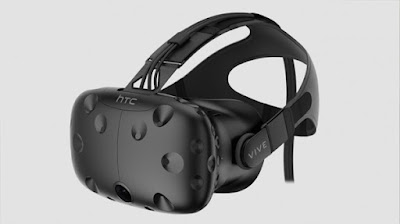
The HTC Vive, is the Steam VR headset created using Valve, the makers of the well-known game Halflife, additionally it's likely to reach stores.

The HTC Vive works with Valves huge gaming and plugs into PC. It contains 70 sensors to offer 360-degree head-monitoring as well as a 90Hz refresh rate; the stat of the VR headgear is the primary key to keeping down to prevent the motion sickness for an individual. Motion sickness is unable to why HTC came up with motion sickness remedy so that’s be prevented occasionally particularly in gaming.

Greatest HTC Vive games

For HTC Vive is the Lighthouse room tracking which allows you to move around utilizing the headset on, among the very most successful games created. Even though it means mounting some detectors at home in order to avoid any mishap the effect is next degree.

http://tntreview.com

Oculus Rift

Oculus Rift is the virtual reality headset that started the craze of everyone. They began a campaign on Kickstarter to finance their creation, folks such as the VR theory plus they collected plenty of backers on Kickstarter and additionally Facebook to get a cool $2 billion, Oculus created by Palmer Luckey, the Rift tracks your head moves to provide 3D pictures on its stereo displays and plugs into your PC’s DVI and USB ports.

The client version Rift, working at 233 million pixels per second uss a 2160 x 1200 resolution. It's high tech things, which matches the HTC Vive for refresh rate, but lags behind PlayStation VR. However, given its availability to the power of PCs that are latest, it’ll be pushing on much more pixels in relation to the headset of Sony.
Greatest Oculus Rift games

Oculus Rift is prepared for sending although Oculus Touch controller is likely to be delayed to start until much later in the year, plus it could be outside in the marketplace, so users can take pleasure in the Oculus Rift VR encounter, but the Rift includes Xbox One control pad.

To read more regarding the top VR Headsets and Games, news and gadget reviews, see TNT Review web site at http://tntreview.com.